
COMMUNE Blog · Chalk & Pen Devotional for Black Scholars
The Fire Within: On Inheritance, Responsibility, and the Right to Have a Life
Inspired by Harmonia Rosales's portrayal of Shango and his journey toward the ancestral fire of Aganju (Chronicles of Ori, 174–181).
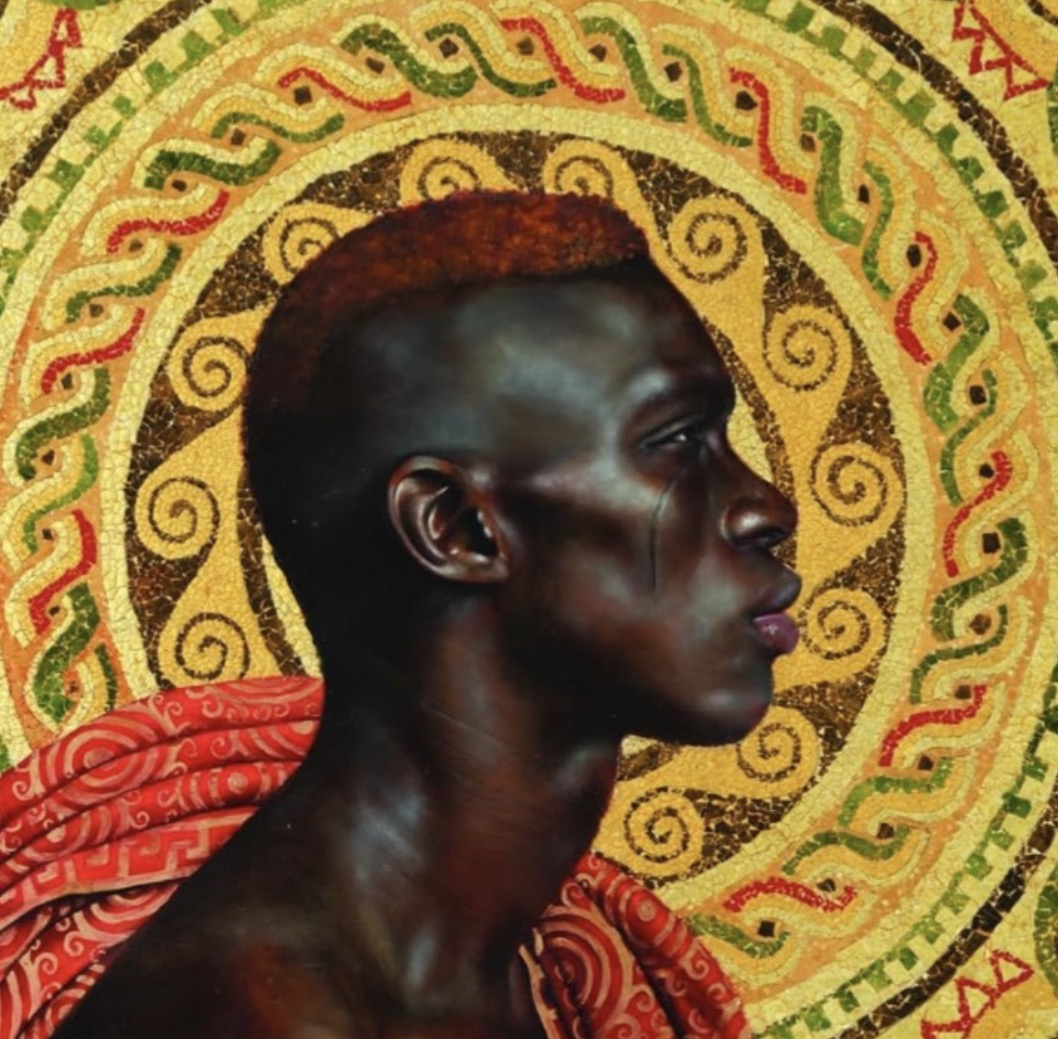
A meditation for scholars who have inherited the responsibility to solve every problem, repair every rupture, and carry everyone forward.
The Inheritance of Fire
There comes a moment in a scholar’s journey when inherited wisdom must meet the truth of who we are called to become.
In the account of Shango, Jakuta prepares his son for leadership. He imparts knowledge and encourages his ambitions. Yet Jakuta has hopes of his own. His son’s ascent offers the possibility of restoring what he has lost.
The relationship invites a question: What happens when our inheritance includes the obligation to resolve what others could not?
Some of us received this assignment long before we could name it. We became the dependable child, the family mediator, the person who could anticipate a crisis and find a way through it. Praise accompanied our resourcefulness. Others came to expect our availability.
Over time, a capacity became a role. A role became an obligation.
We learned to recognize distress before we learned to recognize our own limits. We became skilled at repair. We grew less certain of who we were when no one needed rescue.
For scholars, this inheritance can follow us into academic life. We become the colleague who absorbs departmental conflict, the mentor available beyond reasonable hours, the person expected to repair exclusion without adequate authority or support. Our manuscripts wait while we attend to everyone else’s urgency.
Jakuta’s relationship with Shango invites us to examine the expectations that accompany love. We can honor those who prepared us without accepting responsibility for every unfinished struggle they entrust to us.
The Power We Seek
Jakuta directs Shango toward Aganju and the ancestral power of fire. The power Shango seeks belongs to a history that precedes him.
For the habitual problem solver, this revelation raises another question: Must inherited power always take the form of service to someone else’s need?
Our traditions have given us discernment, imagination, courage, and communal care. These gifts can sustain our scholarship. They can also help us establish limits.
The ability to solve a problem does not establish an obligation to solve it. Knowledge of another person’s pain does not make us solely responsible for its repair.
For Black women scholars, these distinctions carry particular weight. Racialized and gendered expectations often treat our competence as an inexhaustible resource. Our care becomes presumed. Our refusal becomes an occasion for scrutiny.
We may then pursue credentials and recognition as proof that our labor deserves respect. Yet recognition offers little freedom if it merely expands the number of people who expect us to carry them.
The ancestral fire may give us the courage to ask for help, decline an assignment, protect manuscript time, or allow another person to assume responsibility.
Our inheritance includes the right to have a life.
The Journey Through Fire
Shango undertakes a difficult journey toward the power he desires. For those accustomed to repair, the difficult passage may involve the discomfort of leaving a problem in someone else’s hands.
Others may express disappointment. Familiar relationships may require new terms. We may feel guilty when we rest, write, or attend to a desire that has no immediate benefit for anyone else.
Such discomfort requires discernment.
Delores S. Williams’s attention to survival and quality of life challenges the glorification of suffering as a condition of redemption. Her Womanist theological contribution invites us to examine whom our sacrifice serves and what it costs.
Some sacrifices are ordinary. Some hardships are mere friction rather than proof of faithfulness. Every demand placed upon us requires our discernment.
My studies of the desert mothers and fathers have enlightened me on the spiritual quality of discernment to be distinguished from deliberation. Discernment is what we do with Spirit. Deliberation is what we do when discernment demands too much.
A vocation that requires our care must also make room for our survival and quality of life. Communities need practices of mutual responsibility. They cannot depend indefinitely upon one person’s exhaustion.
Three Questions for Reflection
Who has shaped the person I am becoming?
Who taught me that love required me to solve the problem? Which inherited gifts sustain me? Which expectations leave little room for my own life?
What power do I seek, and to what end?
Do I seek the freedom to pursue my vocation, or the reassurance that I remain indispensable? What might become possible if responsibility were distributed among others?
What journey must I undertake?
What boundary would protect my work and well-being? Who can offer care without first requiring my usefulness? What unfinished problem can I release to those responsible for it?
A Closing Meditation: We Do Not Carry Everything Alone
Shango begins in relationship. His journey reminds us that power has a history and that inheritance deserves examination.
At Chalk & Pen, we make room for the scholar whose words have waited beneath the weight of everyone else’s needs.
Our work matters. Our relationships matter. Our lives exceed the problems we can solve.
May we receive ancestral wisdom without assuming every ancestral burden.
May we offer care with discernment.
May we accept support without shame.
May we protect the time our words require.
And when we encounter the fire, may it illuminate the difference between our vocation and the responsibilities others have assigned us.
May we carry forward what sustains life.
May we trust others to carry their share.
Dr. Michele
Back to the writing sessions