
A COMMUNE Expression
Itinerary
Participants: Women educators who are in recovery from breast cancer. Suggested cohort size: 12–15 women.
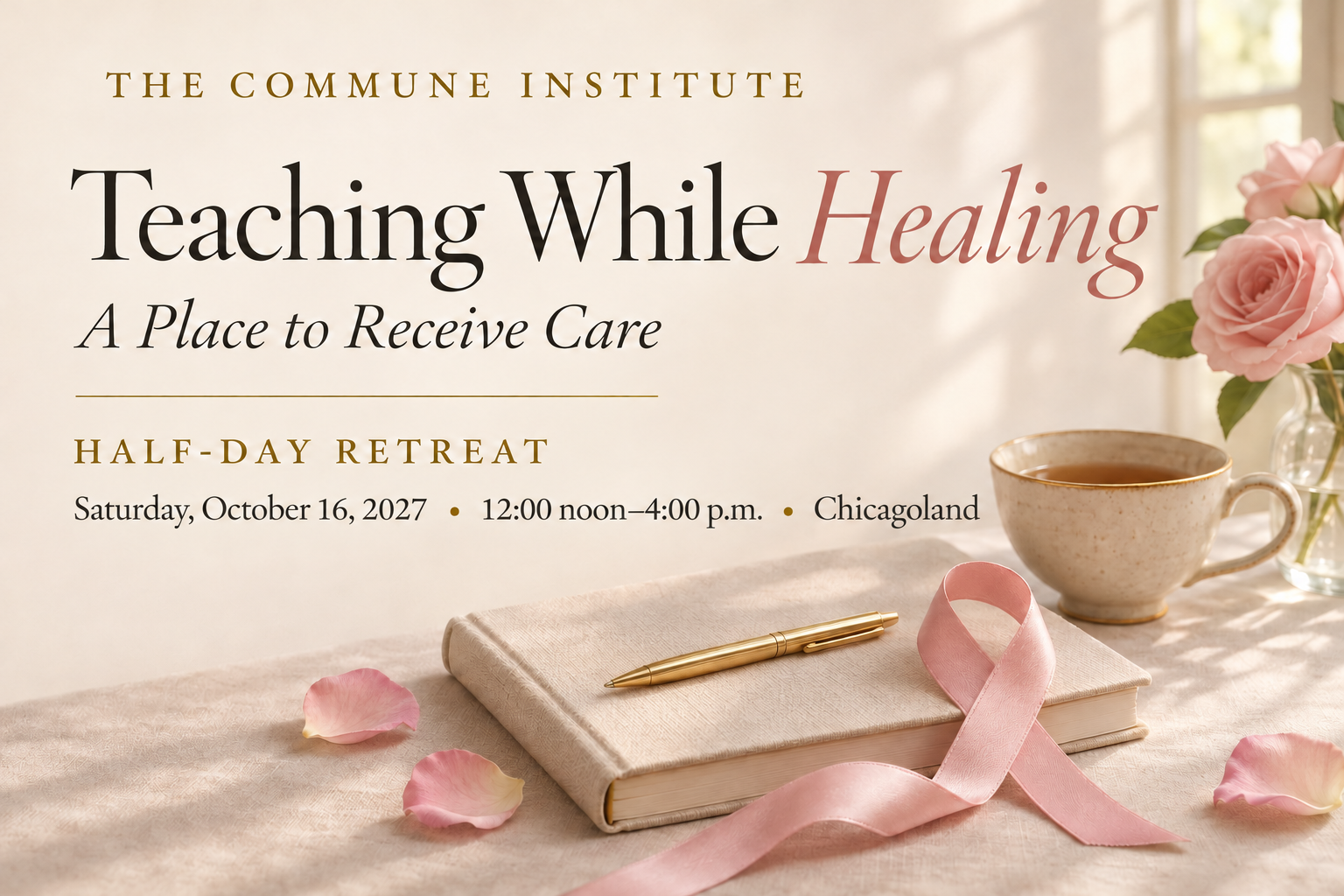
The day begins with the Making Strides Against Breast Cancer Walk, hosted annually by the American Cancer Society on Saturday, October 16, 2027. The half-day retreat follows, beginning at 12:00 noon.
This retreat offers time for rest, spiritual reflection, and companionship. Participants may speak, remain quiet, or step away at any point. No account of illness, testimony of faith, or promise of service is required.
The Day, Hour by Hour
12:00–12:30 p.m.
Welcome to the Table
Light refreshments and a personal welcome. Participants receive a journal and a simple agenda. Hosts introduce the space, refreshments, rest area, and available support.
12:30–12:50 p.m.
A Community of Care
Brief introductions and shared agreements about confidentiality, consent, and the freedom to pass. Optional invitation: “What would help you feel at ease here today?”
12:50–1:20 p.m.
Permission to Receive
A brief reflection inspired by Chanequa Walker-Barnes’s Too Heavy a Yoke, followed by conversation about expectations of strength, educational responsibilities, and the need for care. Private reflection is equally welcome.
1:20–1:35 p.m.
Rest and Refreshment
An uninterrupted break with refreshments, comfortable seats, and access to a quiet room.
1:35–2:10 p.m.
What My Spirit Needs
A chaplain or spiritual care leader guides reflection on faith, doubt, grief, joy, and sources of comfort. Participants may choose quiet contemplation, a journal exercise, or conversation in pairs.
2:10–2:40 p.m.
Room to Breathe
A choice of quiet rest, seated creative expression, or time in an accessible garden or outdoor space. An indoor option remains available. No finished artwork or group report is expected.
2:40–3:20 p.m.
A Meal Without Obligation
A hosted lunch with informal conversation. Staff handle service and cleanup. Participants have time to enjoy the meal without speeches, requests for donations, or assigned discussion.
3:20–3:45 p.m.
Care Beyond Today
Introduce the yearlong cohort and invite participants to identify preferred meeting times, forms of contact, and practical needs. Peer contact is optional. COMMUNE staff assume responsibility for coordination.
3:45–4:00 p.m.
A Gentle Close
An optional word, silence, or brief blessing shaped by participants’ spiritual traditions. Collect a short private feedback card and provide clear next steps. Departure at 4:00 p.m.
Featured Offerings
Care for Body, Spirit, and Vocation
Reflexology
Gentle, restorative touch for tired bodies — an invitation to receive care through the feet and hands, with no preparation or participation required.
Meditative Sessions
Guided stillness and quiet reflection, open to every spiritual tradition — and to those who simply wish to sit in silence.
Salon on Grief & Pedagogy
An open conversation about teaching while carrying grief — how loss reshapes the classroom, and how community can help carry the weight.
Reflection Prompts
Offer these as choices rather than questions everyone must answer.
Permission to Receive
- What do people expect of me when they call me strong?
- Which responsibilities would I welcome help with?
- What makes care feel respectful to me?
What My Spirit Needs
- What gives me comfort at this point in my life?
- What spiritual questions need room without an immediate answer?
- Where do I feel free to be myself?
Care Beyond Today
- What would make this cohort possible for me to attend?
- What kind of contact would feel supportive?
- What would I like this community to understand about my boundaries?
Guidance for Retreat Leaders
Keep the opening reflection brief. Let participants determine the depth of disclosure. Avoid unsolicited advice, comparisons between cancer experiences, or claims that illness has a divine purpose.
Welcome different spiritual convictions. Prayer and ritual should remain optional. Participants may choose silence without explanation.
Provide a quiet rest area throughout the retreat. Arrange accessible seating, nearby restrooms, water, and dietary accommodations. Ask about access needs before the event.
Suggested personnel include a retreat lead familiar with Womanist pastoral care, a chaplain or qualified spiritual care professional with oncology experience, and a hospitality coordinator. One designated person should remain available for private support.
Follow-Up
Within one week, COMMUNE should send a personal acknowledgment, the next cohort date, and a private way to request support. Exchange participant contact information only with explicit consent.
“Your need for care belongs here. You do not have to justify it.”